
Robbins, Illinois: the Village that refused to be forgotten
Built on hope and high water
Sheila Jones grew up on a street in the Village of Robbins where the children of the block gravitated, and where every other house kept a garden.
She remembers a village where everything a family needed sat inside its own borders. A pharmacy at 139th and Claire run by two Black pharmacists — twins. Two dentists, mom-and-pop stores, a pizza parlor, a shoe-repair shop and a record shop. Brownies, Girl Scouts and Cub Scouts all on the same block. Three parades a year and two rodeos, one on horseback and one on motorcycles.
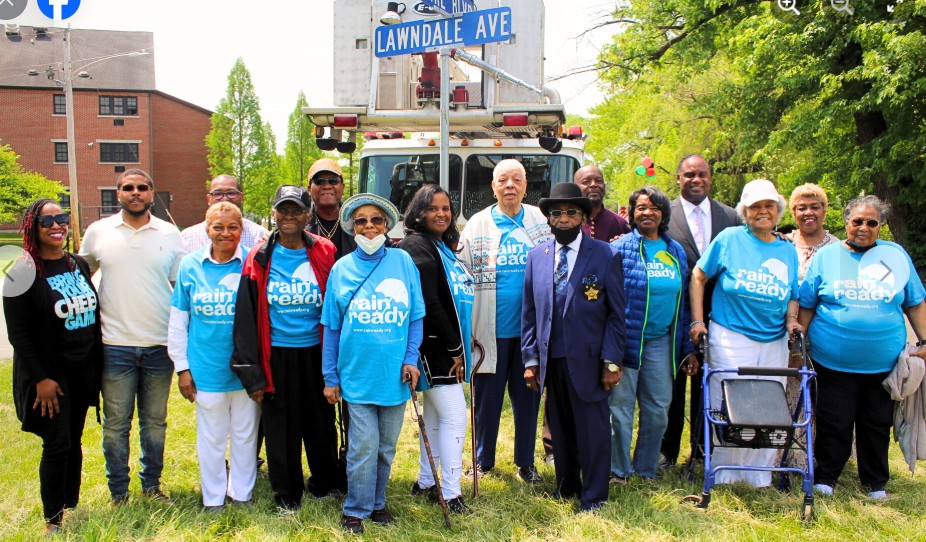
Ms. Jones has not lived in Robbins for years now. She spent her first 50 here, and she still comes back as an active member of the RainReady Robbins Steering Committee. The resident-led Steering Committee was formed in 2016 as part of the broader RainReady Calumet Corridor initiative, with the goal of raising the quality of life in the Village through investment in economic development, education and beautification.
“There’s so much RainReady can offer the community because of the education component, the beautification component, the stormwater-solution component — and there are opportunities.”
The origins of Robbins
Robbins is Chicagoland’s oldest majority-Black suburb, incorporated in 1917 on land that had been platted since 1891. Dr. Dawn Colquitt-Anderson, director of the Robbins Historical Society and Museum, traces its founding to the years just before the Great Migration, when Black families came north for work around the 1893 World’s Columbian Exposition and found the city’s Black Belt already crowded and expensive.
“Robbins became this secondary destination for migrants from the South seeking better opportunities, seeking better work. But those living conditions were harsh. The tenements they were staying in, the apartments they were staying in, were underkept and overpriced, and they wanted land. These were large agrarian families seeking to recreate what they left.”
— Dr. Dawn Colquitt-Anderson, director, Robbins Historical Society and Museum
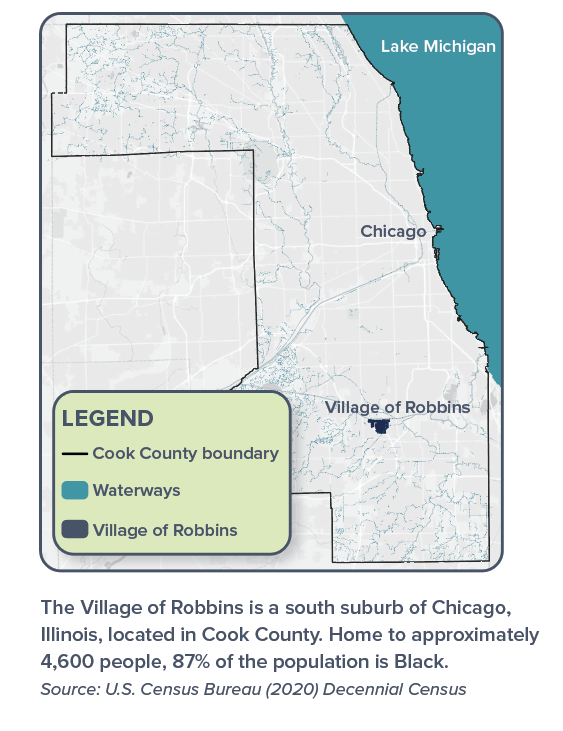
The village took its name from Eugene S. Robbins, a New York developer whose company had purchased cheap land south of the city betting that Chicago would expand southward. However, the expansion was stopped short due to a successful annexation challenge by Blue Island, leaving behind a settlement dependent on a neighboring town for its municipal services. Rather than continue to be dependent on its neighbors, residents took matters into their own hands and established Robbins.
The land that made it possible, and the water that never left
The same low-lying ground that made Robbins affordable to working-class Black families leaves it chronically flooded. According to Dr. Colquitt-Anderson, the village was nicknamed Mudville due to the sparse network of sidewalks and soggy conditions after storms that turned walkways into mud puddles. More than a century later, the water continues to be an issue, and climate change is making the storms that produce it more frequent and more severe.
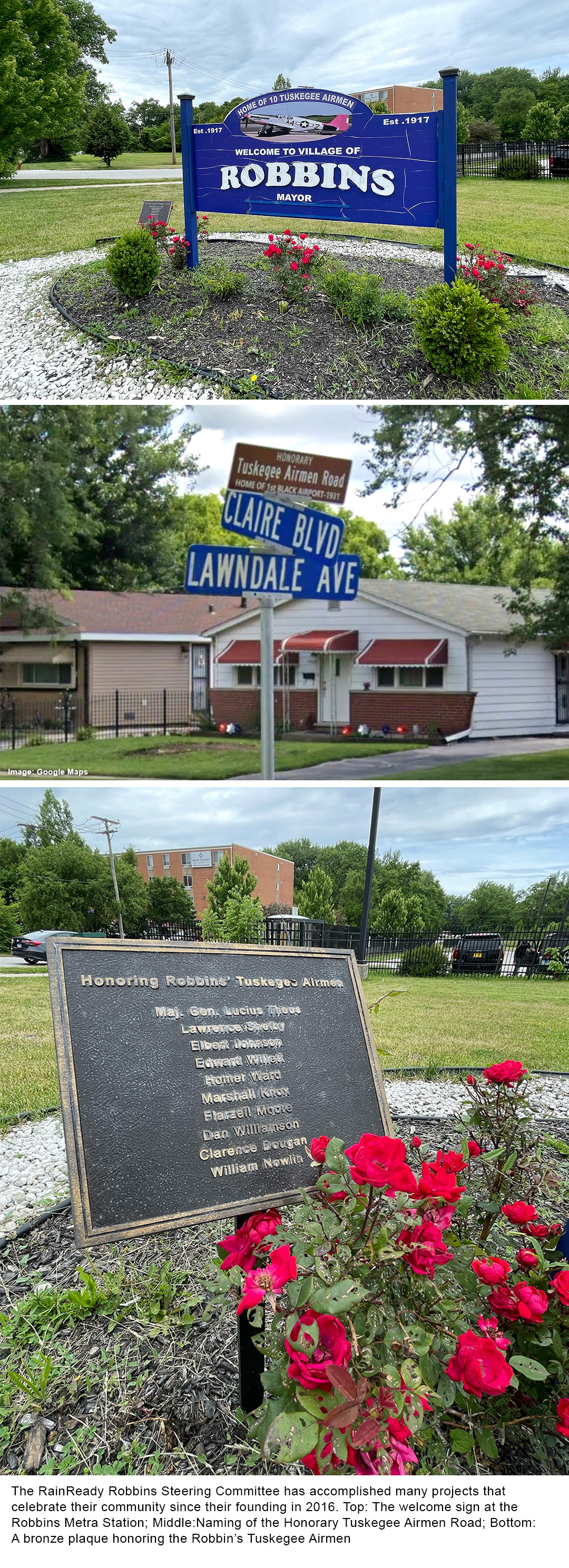
And much of what Ms. Jones remembers is at risk of going unrecorded. Robbins was home to the country’s first Black-owned airport and to 10 Tuskegee Airmen. Nichelle Nichols, who played Lt. Uhura on “Star Trek,” grew up here; her father was once the Village’s mayor. SB Fuller, one of the wealthiest Black men in America in the 1950s and ’60s, built his house in Robbins when his peers were steering him toward posh city neighborhoods. Today, most of these sites are unmarked or in disrepair.
Dr. Colquitt-Anderson names the structural version of the same problem. Robbins has keepers of its history — families, elders, a handful of collectors — but it does not yet have a public one.
“There’s these pockets of folks that have pieces of the story, but we don’t have much of a public history culture. Our history is more siloed into families, and that leaves things very vulnerable,” Dr. Dawn Colquitt-Anderson notes
The committee that kept meeting
The RainReady Robbins Steering Committee is celebrating its 10th anniversary this year. Few members had joined because they were excited about stormwater.
“Believe it or not, I joined the group reluctantly, because when it first started, it started out with rain barrels. And I said, ‘Rain barrels? I don’t want to get involved with rain barrels. My driveway is too small.’ But something held my interest, and I went to the next meeting, and I got a little bit more interested,” shared Juanita Williams, co-chair of the RainReady Robbins Steering Committee.
What held her was the scale of the actual problem. “It was for the betterment of the Village, for the betterment of Robbins — to stop the flooding, because it’s such a big issue out here,” Ms. Williams said. “I just wanted to get involved and help as much as I could.” Eventually the group asked her to be co-chair. By then she said yes without hesitating.
Ms. Jones came the long way around, too. She went to the early meetings without committing to anything, because she did not think it was right to sign on to something she did not yet understand. “I kept coming to these open meetings — open forums, or whatever they were called at the time — and eventually I said, “This is something I want to be a part of. It’s a contribution to my hometown.”
JoAnn Rhodes, who is chairman of the committee, is blunter about how she arrived: “I was tricked into getting involved. And I ended up being chairman, which I did not ask for nor expect.” It is a joke, and also a fair description of how volunteer leadership works in a village of this size. Ms. Rhodes served 40 years on the Robbins library board, ran a cooking class for neighborhood kids and kept a garden at the library.
Moving things forward and getting things done
Long before Greenprint entered as the program manager for the implementation phase of RainReady Calumet Corridor in 2023, RainReady Robbins was already putting things in the ground, despite the program hiatus caused by the COVID-19 pandemic. Ms. Williams is proudest of the first one: a welcome sign at the Metra station, where there had previously been no sign at all: “It showed the Village colors of blue and white, and the white gravel. It was just beautiful. And that made me more enthusiastic, wanted to do more.”
Then, because the first Black-owned airport sat on a side street where visitors would never find it, members went to the Village historian and came back with names, dates and a bronze plaque honoring the 10 Tuskegee Airmen who lived in Robbins. They also successfully advocated for an honorary street designation, Tuskegee Airmen Road.
For Ms. Jones, that project was personal in a way she did not expect. She had known the Airmen’s children growing up without ever knowing what their fathers had done — children were not around adults the way they are now, and some people did not want to talk about it. She learned as an adult that her godmother’s husband was a Tuskegee Airman.
“I went to Washington, D.C., to the African American museum, and I saw Nichelle Nichols’ uniform — Lieutenant Uhura — and I was so proud, because I knew her story. It’s got so much history. People who migrate here from Chicago can’t even imagine all the things that happened here,” said Ms. Jones
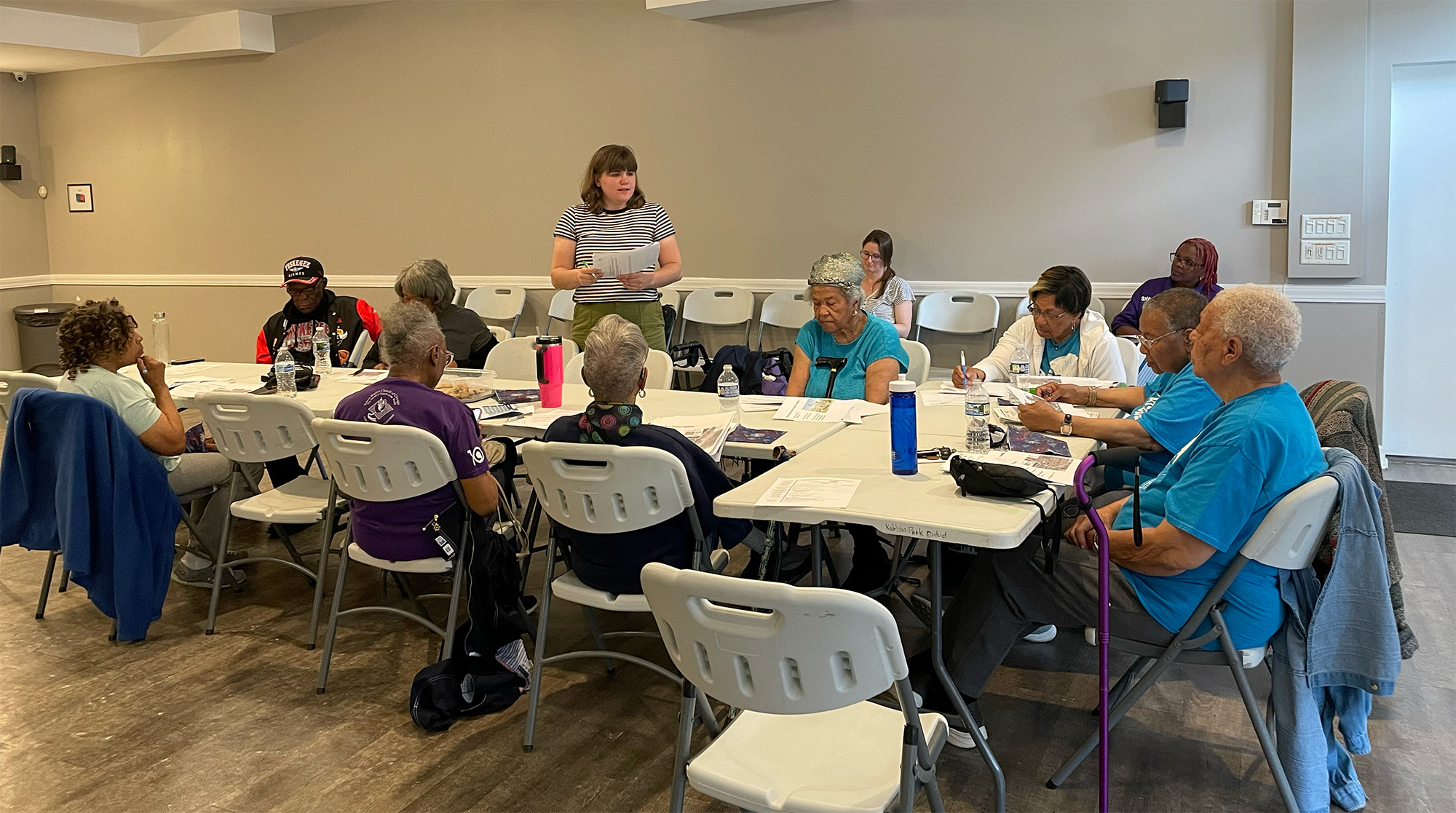
With these impressive, self-led accomplishments under their belt, the Steering Committee members were rightfully wary when Greenprint entered the picture as the new program manager for RainReady Calumet’s implementation phase.
Anna Jentz, senior planner at Greenprint and the associate program manager recalls, “The first meeting, they wanted to know who we were and where the money was going. Three years in, we’re coordinating over text and they’re telling me about their music group’s most recent recital. Our relationship has come a long way.” Anna attributes the successful partnership to a few key factors: consistently showing up to meetings with a listening-first approach, making good on promises, and learning how to disagree productively.
From plan to pavement
The stormwater sidewalk – a single solution for two problems
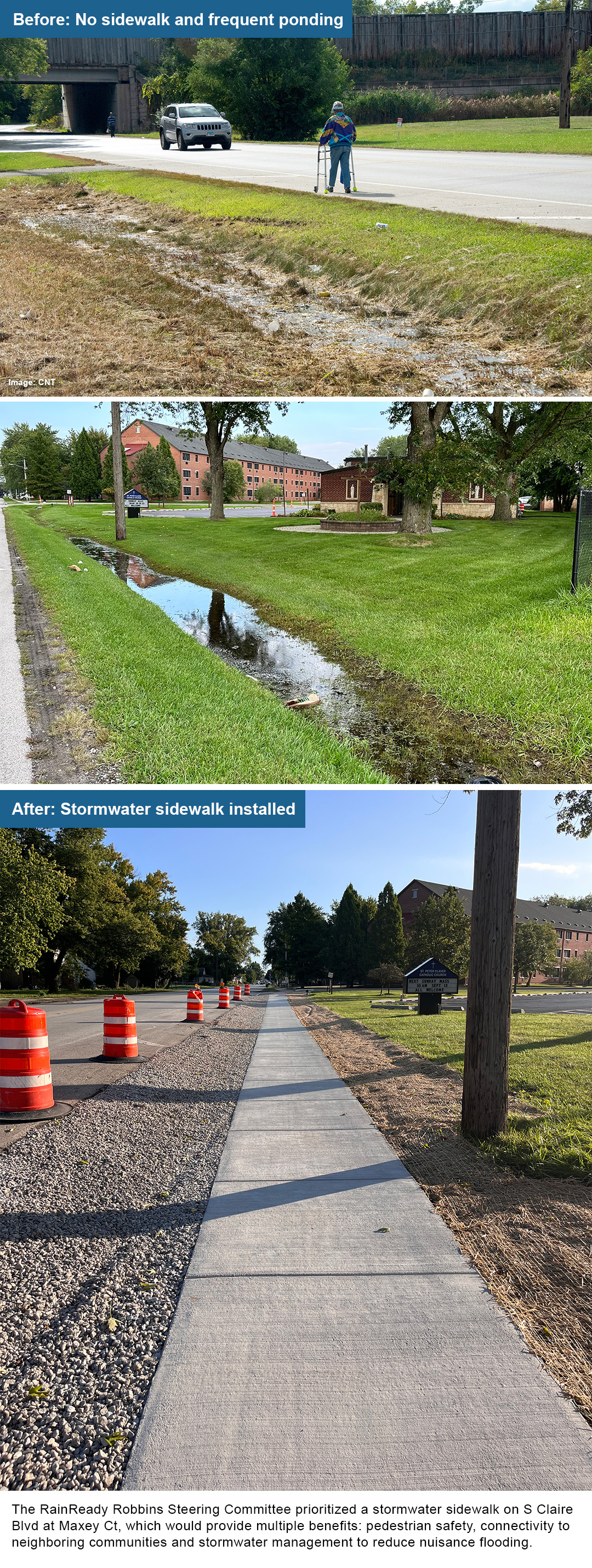
As part of the RainReady Implementation Initiative, the community identified a stretch of South Claire Boulevard where flooding was frequent. Ms. Williams is a member of Saint Peter Claver Mission Church, which sits on the property where the flooding has persisted. She watched the problem grow from a pew.
When the Metropolitan Water Reclamation District was working on the north end of Robbins, she asked whether anything was planned for the southern end on S. Claire Blvd. and was told the funding covered only that first stretch. She did not give up, raising the issue of the standing water when asked by Greenprint which areas needed to be prioritized for flood mitigation as part of the RainReady implementation initiative. This time, Cook County funds from the American Rescue Plan Act would be available.
The area around S. Claire Blvd presented two problems that turned out to have a single answer. As Ms. Williams had observed, the roadside ditch was full of water almost year-round, not just in the wet seasons. Secondly, safety was an issue, as that same stretch had no sidewalk, which left people, including many from the nearby senior living facility, walking on the road shoulder to get to and from the neighboring village.
Alex Heidtke, Greenprint’s engineering manager who oversaw the project, found the reason the area never drained was that the swale was not connected to any sewer. While different solutions were explored, the team landed on a stormwater sidewalk which would solve both problems. It would connect the sidewalks between the two villages, providing a safe place for residents to walk, while infiltration trenches on both sides of the sidewalk would allow water to come off the road into a large gravel storage bed, which would manage up to 460,000 gallons a year, eventually to be let out into the existing storm sewer. The project was completed in September of this year.
Grant funding collectively invested through RainReady Robbins
RainReady Robbins Steering Committee Members
Gallons managed per year by the Claire Blvd stormwater sidewalk
Creating connections with living history
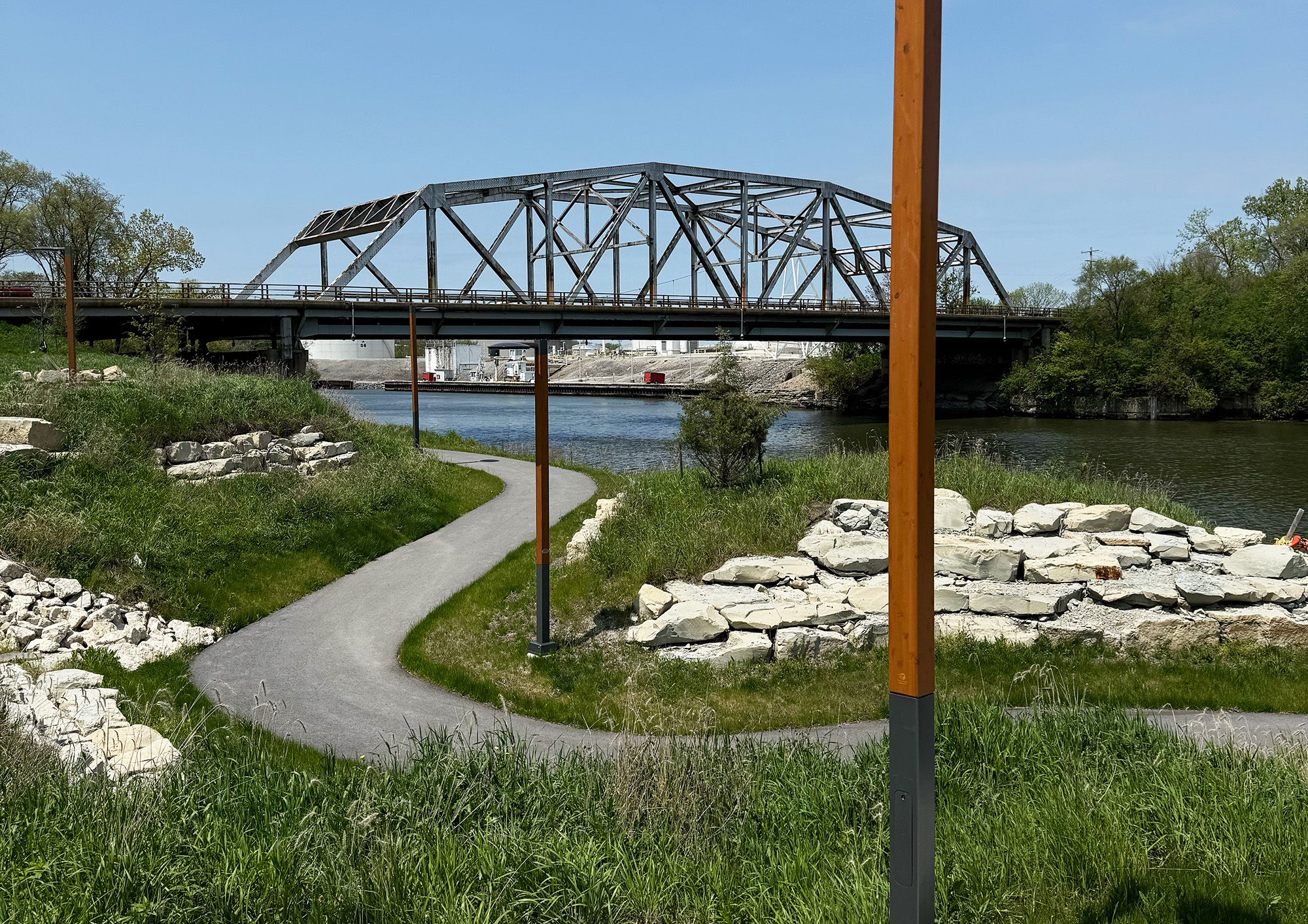
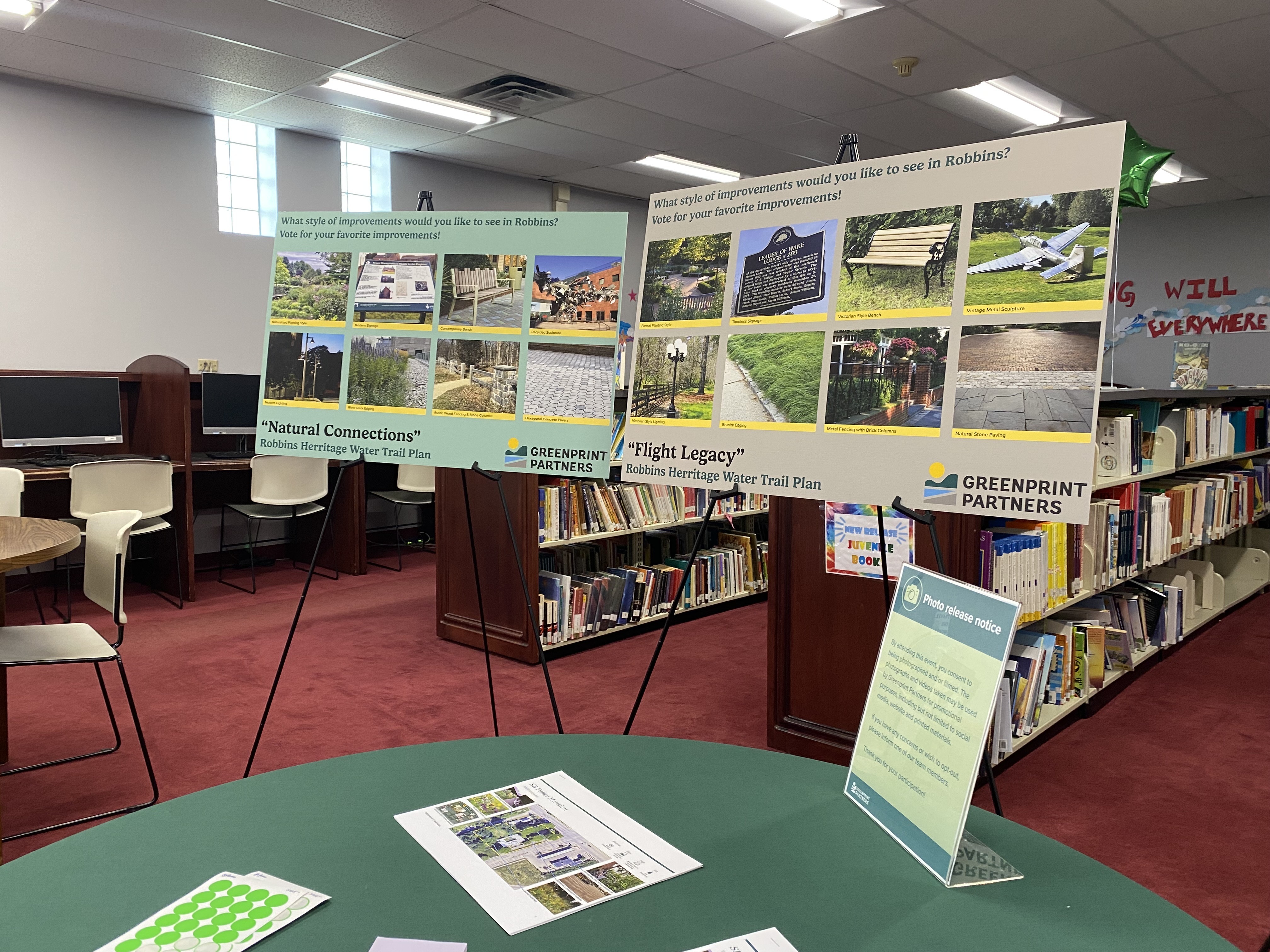
In addition to the work completed under RainReady, the RainReady Robbins Steering Committee, along with Greenprint and funding from Robert Wood Johnson Foundation, co-developed the Robbins Heritage Trail Plan, a roadmap for connecting the Village’s historic sites to the African American Heritage Water Trail along the Little Calumet River.
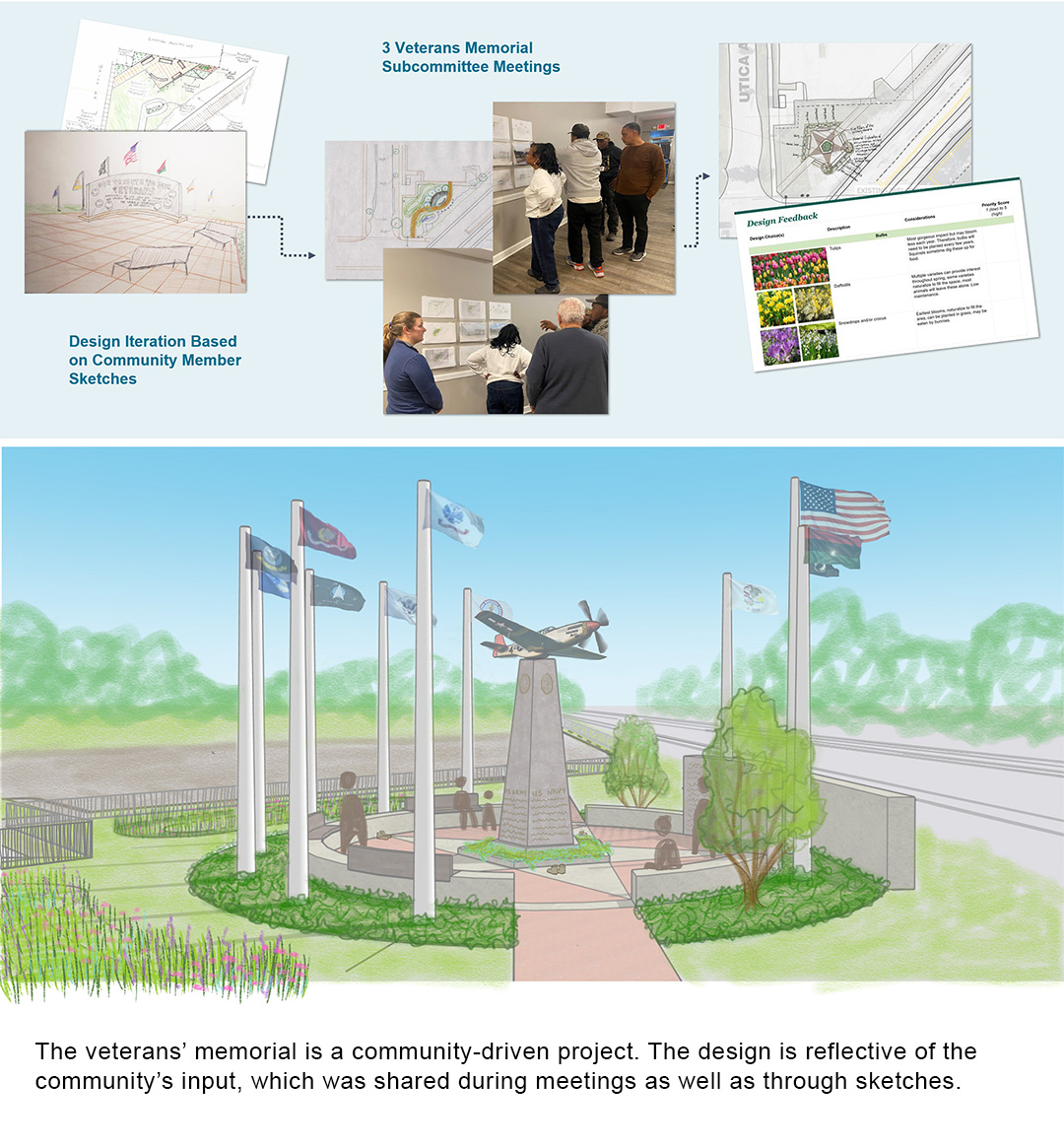
The Trail Plan organizes recommendations into three strategy areas: site and corridor improvements, physical connectivity, and signage and wayfinding. It also incorporates concepts for projects the Steering Committee voted to prioritize, including a military veterans memorial at the Robbins Metra Station and an ADA-accessible boat launch at South Woodlawn Avenue, which would physically connect the trail in Robbins to the African American Heritage Water Trail.
The Plan was a formalization of the vision and accompanying to-do list committee members have been carrying for years and was recognized by the American Planning Association Sustainable Communities Division in 2026 with a Quality of Life Award.
“I sat down and read it last night. It brought tears to my eyes. I can see it,” shared Mrs. Murphy, RainReady Robbins Steering Committee member, on receiving the final plan
Moving the veterans memorial forward
The veterans memorial idea started with two women in a car. “[Ms. Rhodes] and I were going out driving one day, and we saw these memorials, and she said, ‘There’s a veterans memorial in every area around us — and we don’t have one.’ So we said, ‘Well, maybe that’s a project we can work on.’ We picked the Metra station because she thought it would be a prominent place for the site. And I have to say, the design I’ve seen of the memorial is fabulous,” said Ms. Williams.
Members of the RainReady Steering Committee, along with community members, shared their vision and hopes for the memorial with Greenprint. Desires included a grandiose, attention-grabbing design, visibility and accessibility from multiple points, incorporation of the theme "For Love of Liberty," taken from a 2010 documentary by the same title, and alignment with the Robbins Veterans Association's website.
Meg Schroeder, senior designer at Greenprint, translated their ideas and feedback into a design concept that honors African American veterans’ involvement in wars throughout US history and elevates Robbins’ significant ties to the Tuskegee Airmen. The design concept, along with estimated fees for construction, will be used by the Steering Committee to help socialize the idea with key stakeholders and raise funds for building the memorial. The design work was supported through EPA grant funding from the Southwest Environmental Finance Center.
Ms. Rhodes has been asking about that memorial the entire time she has been on the committee. “But I kind of think, once we do the memorial, I’m going to retire.”
What does long-term success look like?
For Ms. Jones, it is momentum: “I want to see newness — I want to see growth. I grew up here and I had a great time growing up, and I don’t see why we can’t go forward in improvements.”
For Dr. Colquitt-Anderson, the trail and the museum are the same project approached from two directions. The Historical Society’s building is closed for health and maintenance reasons, so the museum is showing up inside other organizations’ programming to stay visible. Her long-term work is bringing the SB Fuller House back online as a landmark, an exhibit space and a gathering place in the same northern stretch of the Village as portions of the heritage trail and new Metropolitan Water Reclamation District (MWRD) stormwater park.
“We’re really excited about the activity that we’re seeing. There’s more interest in the Southland area, including Robbins. More people are coming into Chicago asking for tours, and they want Robbins to be a part of these tours. That’s a prime opportunity — a cultural gateway to the Village,” said Dr. Colquitt-Anderson.
She is direct about the economics, too. “You can actually turn cultural heritage sites into money-making ventures,” she said. That is the logic the Heritage Trail Plan runs on: connectivity that brings visitors to the water trail and the Airmen’s legacy, green infrastructure that turns a liability into an amenity, and implementation work that hires locally.
Asked what they hope for the future of Robbins, each person responded along similar themes: community prosperity and optimism, connectivity and a history that lives on for future generations.
That is the thread running through it all. A welcome sign because there was none. A plaque because 10 Tuskegee Airmen deserved to be findable. A memorial because every village nearby had one. A sidewalk because elders walk that corridor and the water does not belong there. All these initiatives amount to Robbins continuing what it started in 1917 — building the things it was told it would have to build itself.
With gratitude to the RainReady Robbins Steering Committee
- Loretta Dowdy
- Helen Echols
- Debra Foster
- Lula Fulson
- Daniel "Doc" Habeel
- Sheila Jones, Secretary
- Leota Murphy
- Myrna Ratliff
- JoAnn Rhodes, Chairman
- Saundra Shelley
- Leila Ward
- Juanita Williams, Co-chair




17 North State Street
Suite 1400
Chicago, IL 60602


